Showing posts with label Eucharist. Show all posts

Friday, 12 July 2013

Unity between denominations? Part IV: The Witness of the Early Church in the Church Fathers

Previously:
Part I: The Problem
Part II: What kind of unity are we called to?
Part III:  The Witness of the Early Church in the New Testament

Even a cursory perusal of the Church Fathers reveals a Church that considered its visible unity to be of utmost importance. 

1. The Didache (around the turn of the 1st Century)
  • has clear references to a hierarchical structure (bishops and deacons)
  • also makes clear the importance of the sacraments for communion with the Church, as only those baptised may receive of the Eucharist
2. St Clement of Rome (4th Bishop of Rome) (Letter written 96AD)
  • Tertullian tells us he was ordained by St Peter (Ch. 32) himself
  • His Letter to the Corinthians is proto-canonical, which means it was read sometimes in the early liturgies
  • In his Letter to the Corinthians, he says
    • "Our apostles also knew, through our Lord Jesus Christ, that there would be strife on account of the office of the episcopate. For this reason, therefore, inasmuch as they had obtained a perfect fore-knowledge of this, they appointed those [ministers] already mentioned, and afterwards gave instructions, that when these should fall asleep, other approved men should succeed them in their ministry. " (Ch. 44)
    • he sees no conflict between saying that members of the Church should not exalt themselves over one another, and yet the established order ought to be maintained. (Ch. 38-42)
    • He condemns their schisms, (Ch. 46) which are even worse than they were at the time of St Paul (recall 1 Cor. 1-3 in particular, and that this is the same Church, the Church in Corinth). He goes so far as to say that through their schisms, the name of the Lord is blasphemed.
    • He speaks as though he expects them to obey, even though he is bishop of Rome and not of Corinth, indicating that already, in 96AD, the seat of Rome was accorded some kind of primacy. (Ch. 59: "If, however, any shall disobey the words spoken by Him through us, let them know that they will involve themselves in transgression and serious danger." See also Ch. 63.)
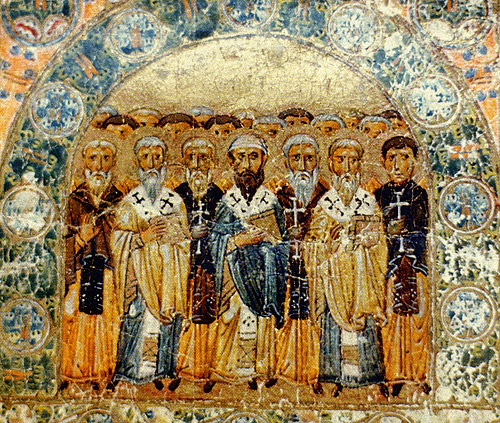
Church Fathers, a miniature from Svyatoslav's Miscellany
3. St Ignatius of Antioch: (3rd Bishop of Antioch) (around the turn of the 1st Century)
  • In his Letter to the Ephesians, he repeatedly asserts the necessity of remaining in communion with one's bishop (Chs. 4-6), even going so far as to say "Let us be careful, then, not to set ourselves in opposition to the bishop, in order that we may be subject to God...It is manifest, therefore, that we should look upon the bishop even as we would upon the Lord Himself." Big call, dude. He also condemns false teachers numerous times, citing the bishops as the bulwark against their heresies.
  • Letter to the Philadelphians: "I salute in the blood of Jesus Christ, who is our eternal and enduring joy, especially if [men] are in unity with the bishop, the presbyters, and the deacons, who have been appointed according to the mind of Jesus Christ, whom He has established in security, after His own will, and by His Holy Spirit."
  • This theme is found in all his letters (all of which you can find here, there are just too many choice quotes to include in this post, I'd end up quoting most of the content), except, interestingly, in his Letter to Rome. It is in this letter alone that he does not presume to correct the Church in their behaviour, nor in their doctrines. This fact, along with the overall tone suggests that he was writing to one whom he thought a superior of some kind.
  • On remaining separate from heretics:
    • "They abstain from the Eucharist and from prayer, because they confess not the Eucharist to be the flesh of our Saviour Jesus Christ, which suffered for our sins, and which the Father, of His goodness, raised up again. Those, therefore, who speak against this gift of God, incur death in the midst of their disputes. But it were better for them to treat it with respect, that they also might rise again. It is fitting, therefore, that you should keep aloof from such persons, and not to speak of them either in private or in public, but to give heed to the prophets, and above all, to the Gospel, in which the passion [of Christ] has been revealed to us, and the resurrection has been fullyproved. But avoid all divisions, as the beginning of evils." (Ch. 7 Letter to the Smyrneans)
      Here Ignatius ties unity of faith with the sacrament of visible unity, the Eucharist.
4. St Cyprian: (Bishop of Carthage 249-258 AD)

How St Cyprian viewed Church unity.

5. St Vincent of Lerins: (mid-5th century)

He wrote a detailed work regarding how the unity of faith is to be maintained.

I could go on and on. Here is another list, some of these I have quoted already.

Just to recap the characteristics pertaining to unity that have come out of these brief examinations of the Church in the New Testament and early centuries:
  • There is one universal Church
  • There are local churches
  • It is visible, both hierarchically and sacramentally, and these are intimately connected
Part V: Visible vs. Invisible Unity

+AMDG

Friday, 3 May 2013

Adoration with the Universal Church on June 2- What is your parish doing?

Pope Francis has come up with a great idea: simultaneous adoration with the whole Church for the feast of Corpus Christi on June 2!!!

Get on this. Ask your parish priest specifically- how will the parish be joining in with this?

What an EPIC Monstrance!!

Tuesday, 23 April 2013

The Radical Transformative Power of the Holy Eucharist

As I mentioned in my post explaining why I'm studying theology, for the Lent of 2011, I decided enough was enough. Either I was serious about believing that all of these
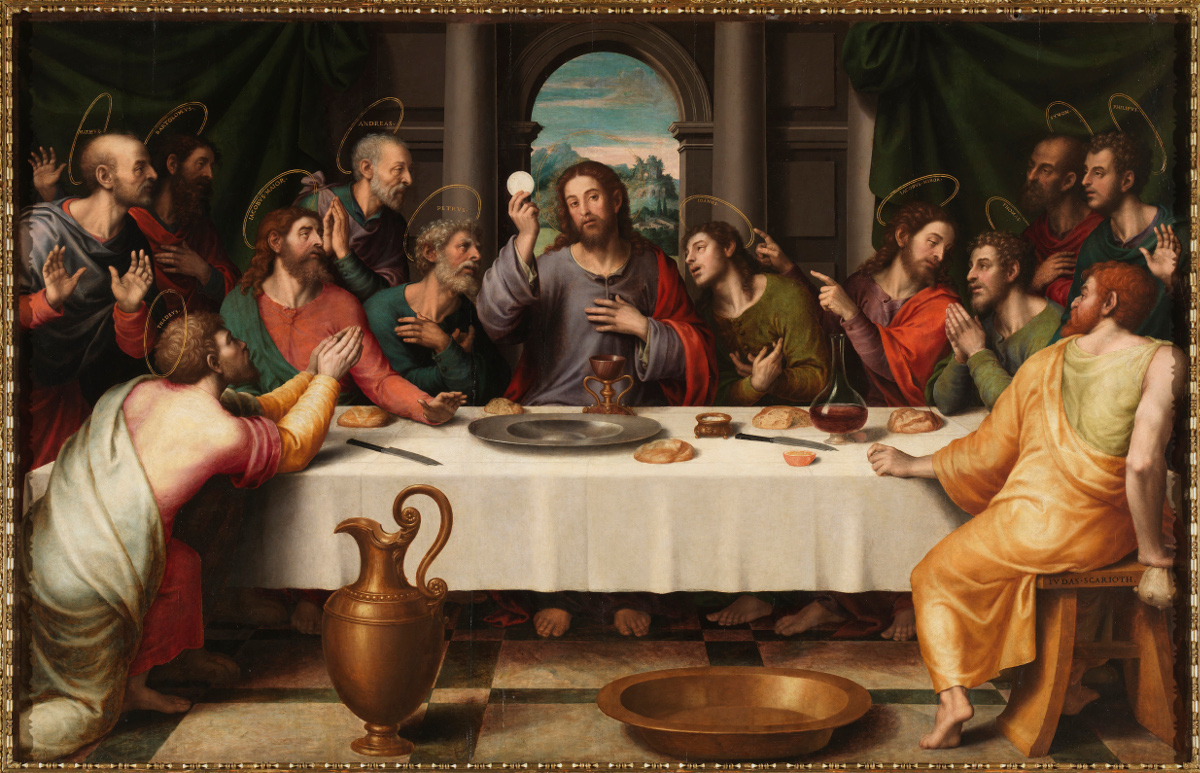
The Last Supper
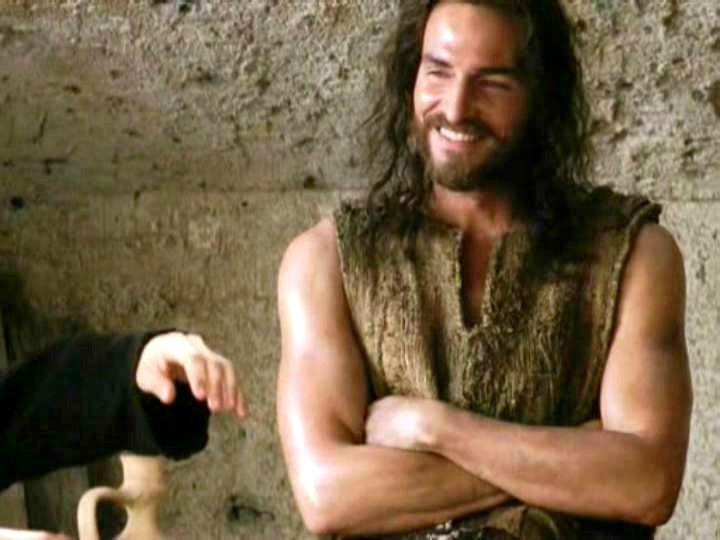
The Second Person of the Blessed Trinity, the Son
of God Incarnate, Jesus Christ, in His Body, Blood, Soul and Divinity

              
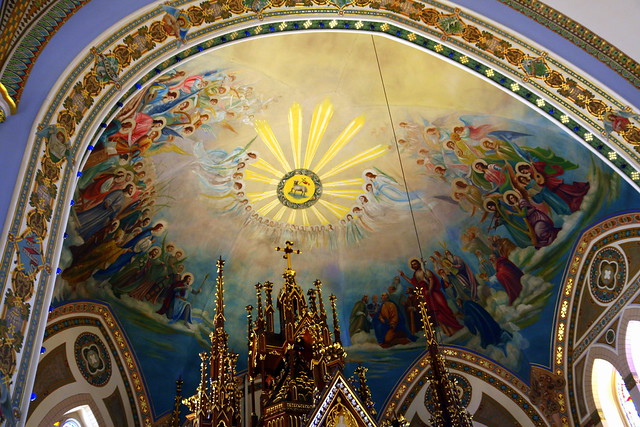
Heaven
Our Lord's Passion

The Eucharist


are one and the same reality, or I wasn't. Either I was serious about taking up my own cross daily to follow Christ, and to love Him with all my being, or I wasn't. There is no possibility of half-heartedness with being a disciple of Jesus- "because you are lukewarm, and neither cold nor hot, I will spew you out of my mouth." (Rev. 3:16) He leaves us with no middle road.

At the time, I certainly wasn't a "Sunday-only" Catholic. But I was definitely floundering spiritually. It is said that one cannot remain stationary in the spiritual life. If you're not going forwards, you're going backwards. If you're not growing in love for God, you're moving further away from Him. I wasn't prepared to make big sacrifices. Or even small ones. Christ doesn't call us to love Him some of the time, or even most of the time, or just when it's convenient. We are called to love Him with our entire selves unreservedly, every moment of every day of our whole lives.

For example, if one really considers what a TREASURE Holy Communion is, if it really is all of the above images, it is in fact not an It, but a Who. The greatest Who of all, Jesus Christ. How ridiculous then, does it sound to say, "I don't feel like going to Mass today, I'm quite comfortable sitting in the sun with my friends." ??!! In fact, any excuse other than bed-confining illness fades away into embarrassed silence. 

So, my Lenten resolution that year was to develop the habit of going to Mass every single day. I figured that if I could at least commit to that intimate moment with Jesus every day, in which He pours unimaginable graces into our hearts, that even if I wasn't yet completely committed to doing His Will always, whatever the cost, He'd be able to take care of the rest. That is, after all, the whole reason He gave us this great gift. So that we, poor, weak human beings that we are, could go to Him, and be strengthened, changed, and made a new creation by Him. 

I won't lie, it was hard. Sometimes, when I had a full day of class, I had to be up before 6 am to make it to Mass before uni. Sometimes I'd sleep in, miss the early Mass, then have to go in the evening when I was extremely tired, and wanted nothing more than to just go home. Sometimes I'd be on a break with friends, and have to leave the fun. The hardest was perhaps Saturday morning, as local Masses are earlier than usual and by Saturday I tend to be quite tired, especially if Friday is a bit of a late night. Or when I'd go in the morning before an exam, wanting to just study, or right after an exam or assignment, when all I wanted to do was zone out and recover.

It required commitment. Willpower. Sacrifice. Discipline. Perseverance. But above all, the grace of God.

So I got through that Lent eventually, missing about 2 or 3 of the 40 days. (Due to accidental Saturday sleep-ins. Oops!) At the end, I gave myself "a few days off". How ridiculous that sounds to me in hindsight. A few days off from the most intimate encounter you can have with Jesus this side of Heaven?! I would want that, why??!! Anyway, I think at the time I was just tired, and wanted to relax my vigilant self-discipline. But over those 3 or so days, I came to my senses. In fact, I found myself not only realising intellectually what a treasure I was foregoing, and remembered why I had started the Lenten venture in the first place (namely that if the Eucharist really is Jesus then there are very few good reasons to not be at daily Mass), but I was actually missing Mass. Or, to be more precise, I was missing Jesus. I missed Holy Communion.

So, since then, I have kept up daily Mass. And in that time, I have seen a tremendous transformation take place.

During 2011, I found myself drawn to prayer in the Church more and more. I went from praying maybe 10-15 minutes a day in total at the most (not including Mass), to spending an extra 30 or sometimes even 60 minutes with Our Lord, talking about life, and getting to know Him. I started actually wanting to do His will, and so earnestly trying to discover it, rather than deciding myself what I would do and then asking Him to make it successful.

I started spotting more of my sins, previously slipping by unnoticed, and beginning the painful process of rooting them out. As a result, I now go to Confession every week or two, rather than every month or two. I started to become more aware of the needs of those around me. I started to attempt to see the world through God's eyes.

And in all of that, I am happier than I have ever been before, because I am now firmly on the path of trying to be a saint. To be a true disciple of Christ, whatever that entails. To be what I was created to be, that is, a human being flourishing as God intended, ultimately destined to be in a communion of love with the Persons of the Blessed Trinity for all eternity.

Be warned, seeking to do the will of God can be a disruptive thing. If you had told me a mere few months before doing Theology that that is what I would be studying the next year, I'd have called you batty. Or if you had told me at the start of 2011 that I'd be off on a one-month course (the Youth Leaders Formation Course) at the end of the year, I'd have said the same.

But, as it happened, both of these things transpired. I went on YLFC, at which we had daily Mass, a nightly hour of Adoration, prayed the Liturgy of the Hours, daily Rosary, four hours of lectures every day, went on a Parish Mission, had a silent retreat, among many other things. It was an intense but fabulous month, a great way to end my degree before starting my next.

I'd like to relate one last episode from the last two years. Earlier in the year, I had an operation, which meant I missed daily Mass for about 2 or 3 weeks, and I missed even 2 Sundays Masses in a row. My wonderful parents were able to bring me Holy Communion about every third day, on average, which was awesome, but not the same as daily Mass. During that time, I learnt a great deal about just how much I rely on the graces I receive from the Eucharist. Living the Christian life was WAY harder in that time than it had been in ages, even compensating for the fact that I was in quite a bit of pain.

I felt generally quite pathetic over those weeks, and was reminded of this terrifying thought: How different would I be if I were not Catholic? I am so dependent on God's grace providing me with the strength necessary to be a follower of Christ, and for Him to constantly be working to make me a new creation.

Truly, Jesus in the Holy Sacrifice of the Mass has left us with the most ridiculously awesome gift. Words fail. I hope this at least has challenged you to re-think your own attitude towards Mass, and whether that attitude reflects the reality of what it actually is.