Showing posts with label mysteries. Show all posts

Wednesday, 14 August 2013

Rearranging the Rosary: The Fifth Mysteries (Consummation)

Previously:
Rearranging the Rosary: An Introduction
The First Mysteries (In the Beginning)
The Second Mysteries (Discipleship)
The Third Mysteries (Kingdom of God)
The Fourth Mysteries (Pilgrimage)

Today is my favourite. I wish I had time to write a whole essay on this, but I'll have to settle for brevity.

The Fifth Joyful Mystery: The Finding of the Child Jesus in the Temple
Finding of the Child Jesus
in the Temple

The Fifth Luminous Mystery: The Institution of the Blessed Eucharist
  • In the Eucharist we meet the Risen Christ, and thus experience a foretaste of Heaven, the fulfilment of all our desires, in which Christ and His Bride become one flesh, the Body of Christ. But also it is mysteriously one and the same sacrifice of Calvary, which Christ is offering before the Father for all eternity.

The Fifth Sorrowful Mystery: The Crucifixion and Death of Our Lord
  • Before He gave up His spirit, Christ said "it is finished", probably better translated as "it is consummated." (Jn. 19:30) Scott Hahn has a great discussion of this, where he argues that the "it" that is completed is the Passover sacrifice, begun at the Last Supper (which is the Institution of the Eucharist).

The Fifth Glorious Mystery: The Coronation of Our Lady Queen of Heaven
  • Since today is the feast of the Assumption, the readings for today were very much linked to this. The Mother of God takes her place in Heaven (Rev. 12:1), reflected also in Psalm 45. In this, as she begins her eternal life with her Divine Father, Son and Spouse, as a fully redeemed human person, she shows us the glory to which we are called. We see this in Christ, but He is not a human person, He is a Divine Person, and had no need of salvation. Mary is the first one for whom salvation is fully realised, and thus in this Mystery we see the climax of what all the other Mysteries have been building up to. The salvation of humanity is possible, because it has been accomplished in one person already.

So what's the point?

We begin our lives as disciples of Christ, becoming a part of and working towards the complete fulfilment of the Kingdom of God whilst on our pilgrimage to Heaven, which will be the consummation of our marriage with God, so to speak; the realisation of the end for which we were created, which is to live in a communion of love with the Trinity for all eternity.

Next time: Wrapping it up

+AMDG

Tuesday, 13 August 2013

Rearranging the Rosary: The Fourth Mysteries (Pilgrimage)

Previously:
Rearranging the Rosary: An Introduction
The First Mysteries (In the Beginning)
The Second Mysteries (Discipleship)
The Third Mysteries (Kingdom of God)

So far, we have seen that as we go through each set of Mysteries in the Rosary, we see the Christian life cyclically reflected in the specific part of salvation history pertaining to Christ's life. (Of course it is also reflected this way throughout all of salvation history.)

Today we're gonna take a squiz at the Fourth Mysteries, which suggest the idea of pilgrimage.

The Fourth Joyful Mystery: The Presentation of the Child Jesus in the Temple
  • the Holy Family's journey to the Temple in Jerusalem is a pilgrimage. Further to this, when we consider that the Temple is essentially modelled on God's heavenly court, and is a microcosm of the New Eden, travelling to Jerusalem is like both the Jewish exodus to the Promised Land, and our journey to our true Promised Land, Heaven

The Fourth Luminous Mystery: The Transfiguration of Our Lord
  • In the account of the Transfiguration in Luke, we read:
"And behold, two men talked with him, Moses and Eli'jah, who appeared in glory and spoke of his departure, which he was to accomplish at Jerusalem." (Lk. 9:30-31)
The greek word used for departure here is actually exodos. Jesus is depicted as the New Moses, and so when we put all this together, in the redemption He accomplished at Jerusalem, Christ, the New Moses, instituted the New Exodus of the New People of God, the Church, as they journey to the New Promised Land (as we'll see tomorrow, there's a New Manna too! Also New Law, New Covenant, etc, you get the idea)
The Fourth Sorrowful Mystery: The Carrying of the Cross
  • Jesus instructs those who would be His disciples that they must "take up their cross daily, and follow Him."

The Fourth Glorious Mystery: The Assumption of Our Lady into Heaven
    The Assumption
  • Our Lady completes the last leg of her pilgrimage to Heaven (and this is tomorrow's feast day, incidentally! And a holy day of obligation, don't forget.)

Putting it all together: we begin our lives as disciples of Christ, becoming a part of and working towards the complete fulfilment of the Kingdom of God whilst on our pilgrimage to Heaven.

Next up: The Fifth Mysteries (Consummation)

+AMDG

Saturday, 10 August 2013

Rearranging the Rosary: The Second Mysteries (Discipleship)

To make sense of this post, I suggest you check out the following:
Rearranging the Rosary: An Introduction
The First Mysteries

Today, I'll take an oh-so brief look at the Second Mysteries.

The Second Joyful Mystery: The Visitation
  • Right after learning that she is to be the Mother of God, Mary hurries over to assist her cousin Elizabeth, whom she has just learnt is also expecting, in her old age. This kind of service, that completely forgets the self, is what we are called to as disciples
  • John the Baptist, not even born yet, leaps for joy as he recognises that he is in the presence of the Lamb of God. Does being in God's presence lead to awe, amazement, and joy?
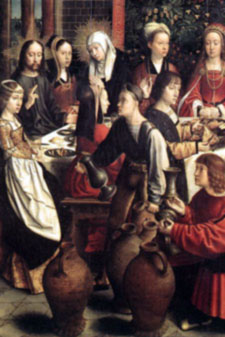
The Second Luminous Mystery: The Wedding at Cana 
The Wedding at Cana

  • Our Lady's instructions to the servants: "Do whatever He tells you," provide the model for discipleship
  • This was the first sign that Jesus performed, and John tells us that the disciples "believed in Him"; (Jn. 2:11) belief in Christ is the crux of being a disciple.
The Second Sorrowful Mystery: The Scourging of Our Lord at the Pillar
  • We can unite the sufferings that we encounter, as disciples of Christ, with the immense suffering that the One whom we follow went through for us 
The Second Glorious Mystery: The Ascension of Our Lord into Heaven
  • Our Lord's final instruction to His Apostles before He left them, was to "Go, make disciples of all nations."
So, our Christian life has some kind of beginning, and this is the beginning of being a disciple of Christ, which involves a life of service, suffering, obedience, and a joy that should overflow with such abundance that we are led to share Christ with others.  

Next up: The Third Mysteries

+AMDG

Rearranging the Rosary: The First Mysteries (In the Beginning)

Yesterday I proposed that the Rosary could be looked at in a way other than the standard chronological narrative.

What am I talking about? Let’s look at the First Mysteries. (One could probably get much more out of this if one spent time looking at the relevant passages in depth, but I will leave that for another day, perhaps.)

The First Joyful Mystery: The Annunciation

  • the moment when God the Son entered time and space to take on our human nature, and thus the beginning of His earthly life (and therefore also His mission) 
  • Trinitarian intimations
  • Our Lady's free and total "yes" to God's will
  • Mary becomes the Mother of God
The First Luminous Mystery: The Baptism of Our Lord

  • This is the beginning of His public ministry
  • Trinitarian intimations
  • baptism is elevated to a Sacrament, through which the Father says to us too "This is My beloved son/ daughter."
The First Sorrowful Mystery: The Agony of Our Lord in the Garden

  • The beginning of His Passion
  • Submission to the Father’s will
  • Humanity is on display
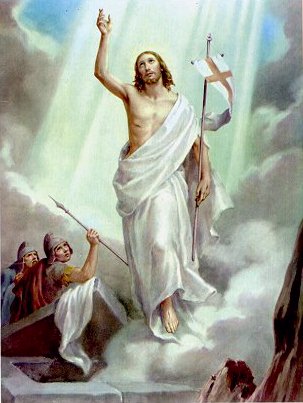
The Resurrection
The First Glorious Mystery: The Resurrection of Our Lord from the dead

  • The beginning of His glorified humanity

Ok so I got a bit lazy, but I'm sure more things will occur to me as I go. The obvious common thread here is that of a beginning. This might not sound all that impressive right now, but when connected with the themes of other Mysteries it will hopefully make more sense. Or maybe you're thinking, well duh, it's the first mystery, of course it's some kind of beginning. Oodelally! (the world should work harder towards making this word catch on.) Now we're both enlightened.

Next time: The Second Mysteries

+AMDG

Thursday, 8 August 2013

Rearranging the Rosary: An Introduction

Yesterday I mentioned that I’d had somewhat of an epiphany regarding the Mysteries of the Rosary. Today, all shall be revealed!! So what did I notice, exactly?

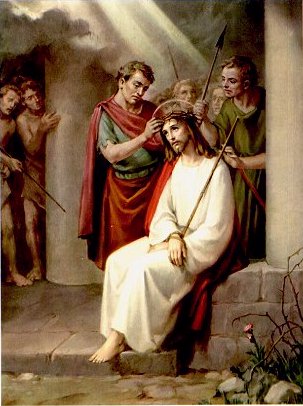
Namely, that if one takes all the third Mysteries, for example, from each of the groups (i.e. The Nativity, The Proclamation of the Kingdom, The Crowning of Thorns, and Pentecost) one can trace the outlines of some pretty interesting thematic contours.

The Crowing of Thorns
In other words, one can group the Mysteries into themes in a way (or even ways) other than the Joyful, Luminous, Sorrowful and Glorious.

The Standard Narrative

The way the Mysteries are usually put together is strictly chronologically, with the overall pattern of:
  • Times of joy in Christ’s life, before His public ministry
  • Times of especial light (or revelation) about Who He is
  • The sorrows of His Passion and Death
  • The glories that followed

I have always thought of them as basically a chronological overview of Christ’s life, which we reflect upon with His Mother, so that, meditating upon these events which are full of significance, we might “imitate what they contain and obtain what they promise”.

I never thought, until recently, to compare corresponding mysteries with each other, to see how else they might fit together, and what light they might thereby shed on each other. (Such an idea may, of course, be extended to include reflections that compare the Mysteries of the Rosary with other events in Sacred Scripture, whether from the Old or the New Testament.)

I am going to argue, by looking at each set of corresponding Mysteries in turn, that what we have going on here is a bit of recapitulation and prolepsis. Ok, what is that? I'll do a bit of quoting from my summary of Dr Robert Tilley's paper Tradition, Temporality and Transcendence: A Biblical Ontology of Time and Space, presented at the Tradition Conference:
The Bible’s recapitulative logic consists in the notion that time and space interact such that the “past is really and truly repeated in the present” and this is perfected and fulfilled in the human person, specifically in the mediating covenant representatives. Prolepsis means that the “present can, in some manner, truly participate in the future, in that what is in the future is the locus of their fulfilment and perfection."
In other words, the Biblical conceptions of time and space are such that it presents history simultaneously repeating itself (after something has happened), but also participating in the future (before it has happened), and this is perfected and fulfilled in the liturgy. This presentation of reality is evident throughout the Scriptures and salvation history, and I think in the Mysteries of the Rosary we have a microcosm of this broader reality going on, focused here specifically around Christ’s coming and His work of salvation. Hopefully these somewhat abstract statements will become clear(er) in future posts!


+AMDG